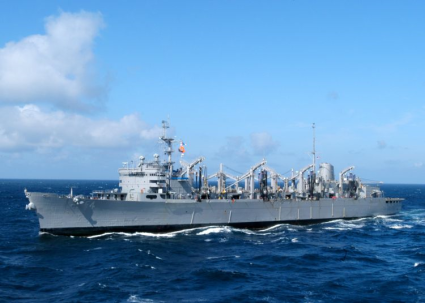
It is fitting that I have been granted permission to post this story on the 234th birthday of the US Navy. CAPT Wellborn gave it a fine title. I’m adding it to the series of my own experiences of that operation.
I met a USNA Graduate via business networking a few months back. A few weeks ago, one of his fellow graduates was going through and I was invited to attend a seminar with the two men. The visitor and I, over late lunch, just as we were about to part, discovered we had both been deployed at the same time, to the same ocean, and to the same operation: El Dorado Canyon.
What Liberty Means to Me
CAPT Buddy Wellborn, USN (Ret), USNA ’59
The Provocation of an Unjust Act. Very early on Saturday morning, 5 April 1986, our National Security Adviser, Vice Admiral John Poindexter, US Navy, woke President Ronald Reagan. He had to inform him that a bomb had exploded in the La Belle, a discothèque in West Berlin, killing a US serviceman and seriously injuring several other Americans.
Two days later, at a meeting with his principal advisers at the White House, President Reagan reviewed the accumulated evidence implicating Libyan involvement in the bombing. He also received an intelligence brief revealing that Libya’s Muammar al-Qaddafi was planning a wave of terrorist attacks on American citizens and interests overseas. He was convinced of Qaddafi’s complicity in the West Berlin attack.
On Wednesday, 9 April 1986, President Reagan, after considering many options, approved “in principal†a military operation against Libya, and authorized the National Security Council to finalize the necessary military planning for a reprisal. Essentially, he had chosen the Clausewitzian option for the continuation of politics by other means. Such means would deliver a “message†that emphatically would inform those supporting or sponsoring terrorism that they could not do so without paying a price—a very heavy price.
Earlier, after the Rome and Vienna airport massacres in January of 1986, the collected intelligence revealed conspiratorial Libyan involvement. Accordingly, Defense Secretary Caspar Weinberger issued warning orders to the US European Command, particularly for SIXTH Fleet and Tactical Fighter Wing FORTY-EIGHT. Therefore, contingency planning for military operations against Libya had been in the works since then. Their planned operation was assigned the code name: EL DORADO CANYON.
The Marque—the License to Strike. For a twelve-minute air raid over Libya, the US plan generated the necessary US Air Force and US Navy assets to assure that at least eighteen Air Force F/B-111F fighter-bombers, and twelve Navy A-6E attack aircraft actually would strike specifically assigned targets in Libya. In a limited sense, with a selected measure of response for a reprisal, the US plan had strike aircraft collectively distributing some 200,000 pounds of high-explosives specifically to selected military/terrorist targets in Libya.
To strike such targets in the environs of Tripoli, US TACWING FORTY-EIGHT would launch F/B-111F fighter-bomber aircraft from Lakenheath and three other support bases in England. To strike selected targets in the environs of Benghazi, US SIXTH Fleet would launch A-6E, A-7, and F/A-18 fighter-attack aircraft from naval aircraft carriers at sea in the central Mediterranean, one in each of two Battle Groups (BGs), namely, one with USS AMERICA and one with USS CORAL SEA.
During the early morning darkness of 14 April 1986, after a dispersed, dark-of-the-night replenishment at sea for “Beans, Bullets, and Black Oil,†the warships of these two BGs rendezvoused northwest of Sicily just off Punta Raisi in Golfo di Castellammare.
Shortly after first light, Vice Admiral Frank Kelso, US Navy, Commander SIXTH Fleet, convened a meeting onboard AMERICA with all his subordinate commanders and commanding officers from these BG’s that formed TASK FORCE SIXTY—TF60. He read President Reagan’s execute order for OPERATION EL DORADO CANYON; and, then prompted discussion, and invited questions. Afterwards, all commanding officers returned to their ships and informed their officers and men of the strike-order for selected military/terrorists targets in Libya.
The warships in these BGs went dark and quiet as they commenced their high-speed runs to the Gulf of Sidra. TOT, Time-On-Target, was set for 0200 Libya-time, 15 April 1986, which coincided with the dark of the crescent moon. This made it 1900 EST, 14 April 1986, which coincided with the prelude to national TV-primetime in Washington, DC.
About six hours before the strike, Rear Admiral Hank Mauz, US Navy, sent the following message to his BG:
“TF 60 AND USAF F-111’S ARE ABOUT TO CONDUCT STRIKES AT A SERIES OF MILITARY TARGETS IN LIBYA IN REPRISAL FOR CLEAR AND CERTAIN LIBYAN RESPONSIBILITY IN RECENT ATTACKS OF TERRORISM. THESE STRIKES WILL REPRESENT A HISTORICAL MILESTONE IN DEALING WITH STATE-SPONSORED TERRORISM. THOSE WHO SPONSOR SUCH ACTS WILL, PERHAPS FOR THE FIRST TIME, UNDERSTAND THAT RETRIBUTION WILL BE SWIFT AND SURE AS THEY CONTEMPLATE THEIR FUTURE ACTIVITY.â€
At about 1730 London-time, on 14 April 1986, the assigned US Air Force tankers and strike aircraft launched from their respective bases in England, and proceeded southerly off the western European coast to Gibraltar, thence turned easterly to the central Mediterranean for the Tunisian coast, thence southerly to Libya—a precisely timed, grueling five-and-a-half-hour trek of some 2000+-nm.
Shortly after midnight Tripoli-time, on 15 April 1986, AMERICA and CORAL SEA began flight operations to launch their aircraft in the Gulf of Sidra. To their west, just before flying over the Tunisian coast, their Air Force brethren were making their fourth and final pre-attack, in-flight refueling from their tankers in a dark sky at 26,000 feet above the sea.
The Reprisal—the Application of Armed Force: SHOWTIME! The prelude for this one-act reprisal began as scheduled at about 0150. It featured pre-strike suppression attacks on Libyan air defenses by US Navy aircraft. They would be streaking inbound low and fast, skimming the wave tops to strike their assigned suppression targets.
Eight A-7’s from AMERICA literally would pop-up at Tripoli’s “front door,†and unleash a devastating barrage of HARM and SHRIKE missiles to suppress Libyan SAM sites there. Eight F/A-18’s from CORAL SEA would do the same at Benghazi.
Turning in from the desert to proceed northerly toward their assigned targets, right on their coordinated strike schedule, six F-111-F’s bore down on Tripoli Military Airfield, nine more bore down on Aziziyah, and the remaining three bore down on Murat Sidi Bilal. They were hugging the deck at less than five hundred feet, with some of them even attacking at just a couple of hundred feet above the ever threatening, protruding ground—unfriendly ground.
In the Libyan capital, at 0200, NBC correspondent Steve Delaney reported to Tom Brokaw, their anchorman in New York, that he was hearing the roar of jet engines outside the windows of his hotel room. Seconds later, at 1900 EST—7:00 PM US-time– millions of viewers of NBC Nightly News, my wife and sons among them, heard the explosions and the crackle of gunfire in the background as Delaney reported, “Tom, Tripoli is under attack!â€
Meanwhile across the Gulf of Sidra, six of the eight A-6E attack aircraft off CORAL SEA were outbound bearing down on the Libyan fighter base at Benina, while six of the seven A-6E’s off AMERICA bore down on the military installations at Benghazi.
In regard to the element of surprise, and Libyan preparation for an imminent attack, US strike pilots reported as they approached their respective aim points that Tripoli’s streetlights were still on, as were the floodlights shining on the largest buildings and the minarets of the central mosque. At Benina, reportedly the “frigging†runway-lights were on— beacon-bright.
By 0213 in Tripoli, all strike-aircraft had reported “feet wet,†and were racing outbound over the sea—with Libya in their rearview mirror.
By 0810 in London, 15 April 1986, the last F/B-111F landed at Lakenheath, marking the longest fighter mission in US history—fourteen hours and thirty-five minutes.
First-to-last, the actual bombing had taken only twelve minutes for these intrepid US Air Force and US Navy airmen to deliver our “message.â€
At sea in the Gulf of Sidra that morning, Vice Admiral Kelso called on the command-net to pass along the gist of a conversational communication he just had had with President Reagan. Synoptically, our Commander-in-Chief had sent a WELL DONE to all those he had put in harm’s way. In other words, he was commending those at the point of the sword that delivered the message for US All– the USA.
I read the message to my crew on the general announcing system, adding my own “positive†direction:
“Our Commander-in-Chief has commended us for a job ‘Well Done’ that we did during the dark this morning. You did good, and I am proud to stand in your company. But, it’s not over, ‘til it’s over. We now have to refuel/rearm our band of brothers out here. That’s our day-job. So, let’s not waste any more daylight. ROMEO is at the dip to starboard– turn-to!â€
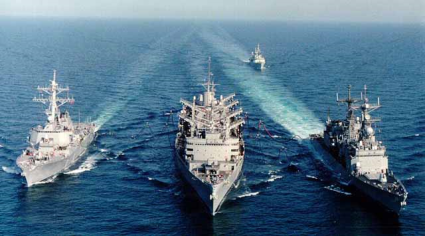
DD-963 SPRUANCE to port, DDG-51 BURKE to starboard and FFG-7 PERRY Class in waiting station, with USS DETROIT (AOE-4) providing fuel and stores
Liquid Energy– Distillate Fuel, Marine. Later that afternoon, I spoke with Rear Admiral Mauz while replenishing AMERICA alongside. We discussed DETROIT’s fuel status after topping off the BG’s warships. For the next three or more days, warships of both BG’s would maintain a defense-posture in the Gulf of Sidra, and stand ready to repulse any Libyan counter-attack. There were White House-directed contingencies in the event of that happening.
He too had seen the message passed to us by the US Department of State to inform us that the countries along the Mediterranean littoral perfunctorily, as expected, had revoked all their diplomatic clearances for port-visits by US warships because of the “ongoing hostilities.â€
We discussed alternatives between here and there, whereas “there,†meant six days out and back to and from our naval facilities at Rota on the Atlantic littoral of southwestern Spain. And, in steaming from here to there, both of us knew that anything could happen, be it good or bad. Possibly, we could take-on fuel at the port of Cagliari on Sardinia’s southernmost tip, and thus cut the turnaround time in half. But, perhaps we could get into Sicily. The AGIP refinery at Augustà Bay on Sicily’s eastern coast was closer, like only a half-day’s steaming away. In any case, I was to do what I could [had to] do. DETROIT therefore steamed northward toward Sicily at 31+ knots—after all, DETROIT was a Fast Combat Support Ship, literally built on top of a battleship-propulsion plant.
As I reviewed the day’s intelligence reports, I noted that the Libyan government was reporting thirty-seven Libyans killed and ninety-three injured by the US air strikes in Tripoli and Benghazi. US intelligence sources also reported that Qaddafi survived the US air strike in his underground bunker, apparently rattled, but unharmed. His fifteen-month old adopted daughter, however, had been killed, and his wife and two youngest sons, ages three and four, had been seriously injured.
Apparently, Qaddafi’s family had been asleep in their beds on the ground floor of the residence when the compound was attacked. I solemnly rationalized that a distinct moral distinction can be made between “collateral damage†accidentally resulting in the deaths of Libyan civilians and the deliberate murdering of civilians by acts of terrorism.
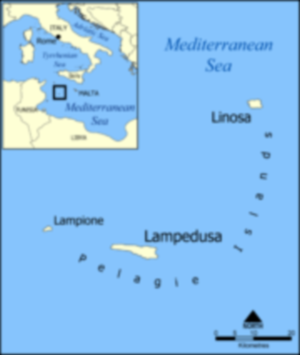
Lampadusa Island Map
Then, as I read on, apparently Qaddafi had had his army launch two Soviet-built SS-1 SCUD-B ballistic missiles at the US Coast Guard’s Long-Range Navigation– LORAN– station on < ahref="http://en.wikipedia.org/wiki/Lampedusa_Island">ISOLA DI LAMPEDUSA. LAMPEDUSA is an island in the central Mediterranean about 170 nm [nautical miles] north-northwest of Tripoli, and about 140 nm south of the western tip of Sicily.
The Libyan SCUD’s though had fallen short detonating harmlessly in the rocks offshore. Nevertheless, the resulting explosions caused two large columns of water to plume brusquely into the air, and the percussion wave shook the homes of some six thousand Lampedusan residents living there. I presumed that such action was more than likely in desperation to do something—anything– to retaliate against the US.
When I finished reading the reports, I simply shook my head thinking that such a “counter-attack†was ridiculous at best—and, at worst was stupid. I scuffed it off—re-fuel was on my mind.
During the early morning darkness of 16 April 1986, I slowed DETROIT’s speed-of-advance just before reaching the turn onto the approaches for the breakwater at the industrial oil-port city of Augustà , Sicily. My intent was to enter port and top-off with jet-propulsion fuel and distillate-fuel marine, about two million gallons– each.
For normal deployed tasking, this would have been just another routine, twice-a-month top-off. This, however, was neither normal nor routine, because it was in the early morning darkness of the day following a US air strike against Libya.
In that such mortally intrusive action was a unilateral projection of national power by the US, the somewhat surprised host countries in the central Mediterranean region had no other choice than to rescind all diplomatic clearances for port visits by US warships until such hostilities could be settled, diplomatically. To say the least, this would be an out-of-the-ordinary port-visit.
My operational plan was simple though. I would maneuver DETROIT for port entry under the cover of darkness—and, be rigged at darkened ship and in electronic silence. Unassisted, I then would moor DETROIT bow-out alongside the pier that housed the fuel-manifolds for AGIP’s refinery. In other words, we were sneaking in.
My crew then would scurry ashore to take-on fuel, just as they had done so many times before. Fuel was always available down at AGIP’s manifolds—24/7. It was there by gravity-feed from storage tanks at an elevation of some 100 feet up the hill.
And, since we were going to pay for what we took, their padlocked valves would not pose a problem—to my street-smart sailors. After all—I moralized– were we not good customers, with ways and means? Most assuredly, we would replace the padlocks with new ones, and I would direct DETROIT’s Supply Officer to leave the necessary paperwork for payment due in the post-box on the pier for business as usual—padlock keys and all.
All in all, it should take us only about four hours to top-up. Then having done so, we simply would slip our moorings to the pier and depart unassisted, and unobtrusively– before any locals came to work. I admit, it was somewhat of an audacious plan—to some extent or greater. But, I rationalized, was it not mission-essential—and, cost-effective too? Because, by the next morning, in less than forty-eight hours, we could be back on our replenishment circuit in the Gulf Sidra for refueling/re-arming the fuel-thirsty ships of our battle group still patrolling there.
After all, is it not easier to get forgiveness than it is to get permission?
Furthermore, could it not be rationalized—and, moralized– that politics are politics, whereas business is business—and, war is war? So, stop procrastinating.
Don’t Ask Why, Just Do It! Think action, and act with thought.
As expected, the port and the surrounding hills were dark. A passing thought of anxiety did wisp through the dark reaches in the back of my plotting mind in that strangely, there did not seem to be any lights on, except for surface navigational aids—on dim. But, I quickly re-focused to more lucid things right in front me, like the prudent ship-handling tasks ahead.
Weather-wise, I noticed that the morning land breeze was offsetting, and thus would be somewhat of a buffer for easing DETROIT alongside the pier, ever so gently. It was pleasantly cool, and even a little misty; but essentially the visibility was clear and unlimited even in the early morning darkness. Therefore, visual observations for navigational fixing would do prudently, thus electronic means for navigational fixing were not needed, and were off.
I had been in and out of Augustà Bay many times over the years, and thus was very familiar with the approaches to the breakwater-entrance as well as the restrictive waters for maneuvering deep-draft ships inside the breakwater. Furthermore, I also was an experienced ship-handler, having served in ships, at sea, for more than half of my naval career. So, an unassisted mooring would not be a problem, or result in any untoward happenings.
I smartly conned DETROIT to head-up the track indicated by the two lighted in-range navigational towers. Radios were tuned to receive, but transmissions were to be kept silent– in that, I did not intend to call in and get permission to enter port. In other words, I imagined us sneaking in slowly at the prudent speed of about 10 knots, and maneuvering in the harbor to make a landing– with a 900-foot, 50,000-ton, gray elephant-behemoth.
An Extraordinary Emotional Event—At Sicily’s Augustà Bay. All of a sudden, the pilothouse radio, tuned to Channel-16, crackled:
“USS DETROIT, this is COMANDANTÈ AUGUSTÀ, What are your intentions?â€
What was just as surprising is that no bright searchlights came on, and no alarms were sounding. And, the query had been made in very clear, and correct, authoritative English instead of the usual pidgin English. I quickly assessed that a senior Italian officer must have transmitted it, perhaps even the Commander of Italian armed forces stationed there.
Trying to overcome the anxiety of the moment, that is, like when caught with your hand in the cookie-jar, my Executive Officer, instead of answering the radioed query, extended the radio microphone in his hand toward me with a look indicative of an unspoken question, “What are YOU going to say now?â€
Well, when a smart-ass is caught red-handed, the reply is typically a flippant one. I took the radio in hand, and gathered my thoughts for some excusatory response. After all, we had been at sea for an extended period and deserved some R&R– Rest and Recreation—like, a sailor’s liberty.
I cleared my throat, to speak somewhat authoritatively, and responded without call-up in “Pidgin†Italian, vis-à -vis, Pidgin English, with a so typical asinine smile on my face:
“Mi parè– Libertà !â€
The counter response absolutely was astonishing. No, it was astoundingly magnificent! Lights came on in the port, and on all the small boats just inside the breakwater. A hundred radios crackled at once: “Parè Libertà — Parè Libertà !â€
The vibrancy of the words echoed off the steel bulkheads of the pilothouse, and seemingly off the hills of the surrounding countryside. The crescendo of freedom’s ring resounded all around us. Several searchlights then came on, but not directly on us. They were highlighting our battle flag—the Stars and Stripes—still flying so proudly at mast-top.
My mind raced to comprehend what was happening.
Then it hit me.
Apparently, Qaddafi had not heeded, nor perhaps even sought, the advice of geo-politicos to ascertain the sovereignty of ISOLA DI LAMPEDUSA.
My, my, Qaddafi had attacked Italy!
I quickly deduced that the Italian ministry in Rome must be in the throws of releasing an official response. Notwithstanding that bureaucratic action, the Sicilians already knew that the attack had been by a terminally ballistic, non-guided missile launched from Libya. Moreover, the Sicilians instinctively knew that the attack was not accidental, or some regrettable mistake in aim-point. To the people here in Sicily, this was an unprovoked, reprehensible attack by Libya onto Italy’s sovereign soil. Thus, Italian forces in Augusta Bay were in the defend mode—and, we were one of their fellow defenders!
Every now and then, you can catch old Murphy resting on his laurels. And, according to O’Toole’s corollary to Murphy’s Law, we were experiencing the Luck of the Irish—and, my Irish eyes were smiling.
The morning mist was cooling my flushed face, as I broke into a smile—a big smile. I had never heard nor seen a welcome like this before—or, since.
My flippancy dissipated. This was indeed an unforgettable–if not a historic– moment. I stood at attention on the starboard bridge wing as we entered Augustà Bay, and professionally saluted the glassed-in watchtower smartly as we passed abeam the breakwater. I even imagined COMANDANTÈ AUGUSTÀ mouthing the words: Mi venne in aiuto.
Without untoward incident, or further adieu, DETROIT was back on station in the Gulf of Sidra by dark-thirty that night. While in-transit that evening, I read the message reporting what President Reagan, pursuant to the terms of the War Powers Act, had forwarded by letter to Congress regarding OPERATION EL DORADO CANYON. His letter, in part, stated that,
“…[The air strikes on Libya] were conducted in the exercise of our right of self-defense under Article 51 of the United Nations Charter. This necessary and appropriate action was a preemptive strike directed at the Libyan terrorist infrastructure and designed to deter acts of terrorism, such as the Libyan-ordered bombing of a discotheque in West Berlin on April 5.â€
As an anti-climatically parenthetical to highlight that business is business, a Libyan-flagged crude-oil tanker was moored across the pier. Her captain invited me over to have coffee, and I did–graciously.
Retrospectively, keep in mind listening to the news reporting strife and struggle among people that whenever, and wherever, freedom-loving people are threatened, they will rally to side with those who champion their cause, and welcome all who will stand beside them to keep the light of Freedom’s Torch burning bright.
That’s my lesson learned for what LIBERTY means to me.
– – – CLAUSULA – – –




![Reblog this post [with Zemanta]](http://img.zemanta.com/reblog_e.png?x-id=0a7b7e67-151b-49f0-9044-db0aeb4e7747)